“I sat with my anger long enough until she told me her real name was grief.”
-C.S. Lewis
Step 1: Lose a grandparent.
You will probably remember the death of your first grandparent forever. Reflect on what your last interaction with them was.
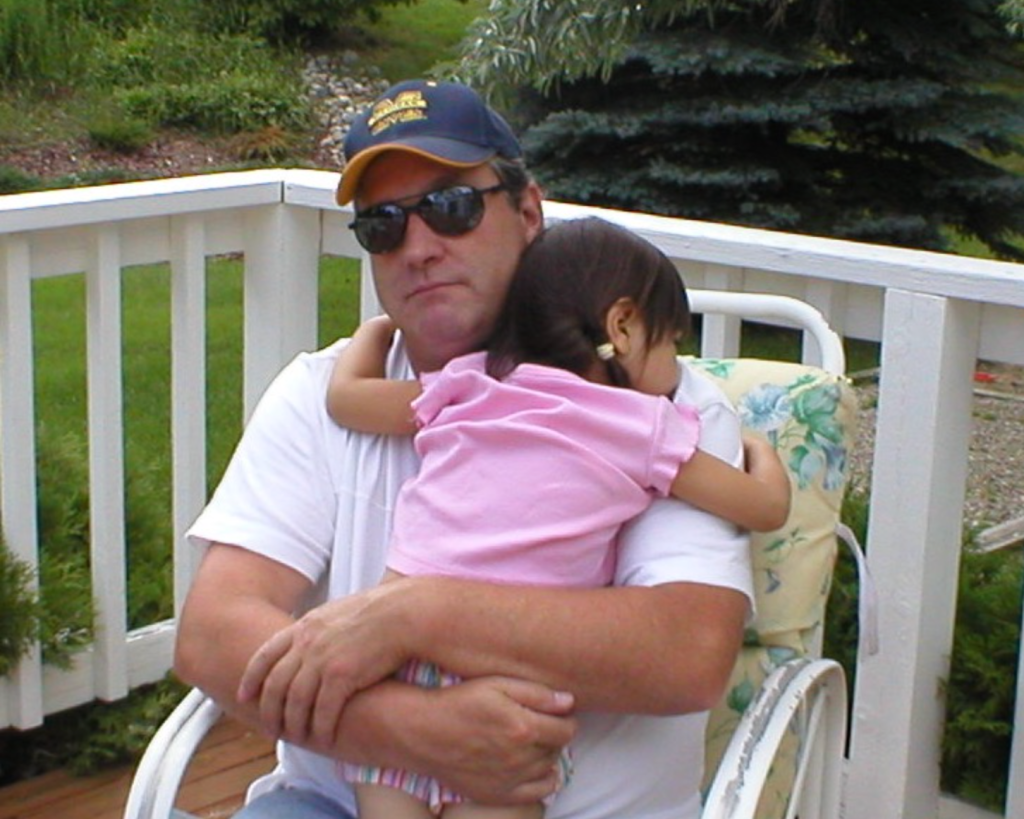
What is ALS? At 12, all I knew was that my grandpa had it. My nana and my father talked it over, but there wasn’t much to say. My grandpa was going to die, sooner rather than later, and no one could do anything. We tried, of course. Saw the best doctors in Michigan, explored every treatment option. It didn’t matter– this is a walk of life everyone takes. I didn’t believe in God, but it felt like it was worth a shot to ask Him for a miracle. We didn’t get one.
The last time I remember seeing my grandpa was a fleeting moment at best. I was an awkward 13 year-old in middle school, with a loose sense of permanent loss and shaky self-confidence. He was visiting my dad at our house, when he could still walk. I rounded the corner to head up the stairs and glanced into our TV room. The strong, confident handyman I knew to be my Pa-Paul sat on our couch, a bit thinner than I remembered and with the stillness of someone undeniably ill. I felt a knot in my stomach for not saying hello, and I darted up the stairs.
He died. And I felt nothing that I should’ve in that moment. Cursed by the passage of time, all of my beloved childhood memories I shared with my grandpa had slipped away. Pool parties, gifts, the fact that my first steps were taken in his house– endless acts of love all lost on me. I didn’t feel the closeness that should’ve been there. I said goodbye in the only way I could, and I sobbed heavily over his open casket at a time when he could no longer see me. He was already gone. I couldn’t find the words, alive or in death.
That didn’t feel right. I don’t think that’s a proper way to say goodbye.
Step 2: Try again with a great-grandparent (if applicable).
If this step doesn’t apply, skip to Step 3.
I was lucky enough to have my great-grandma in my life until I was 17. Mimi. She was a light in everyone’s lives, and she touched the hearts of countless people. At her core, Mimi was a giver. Through and through, she would be there for you in ways that never even crossed your mind. She had seven daughters and the strength to match. Mimi restored her own houseboat, partied until the sun came up, and loved her only great-grandchild to death. I was spoiled in so many ways.
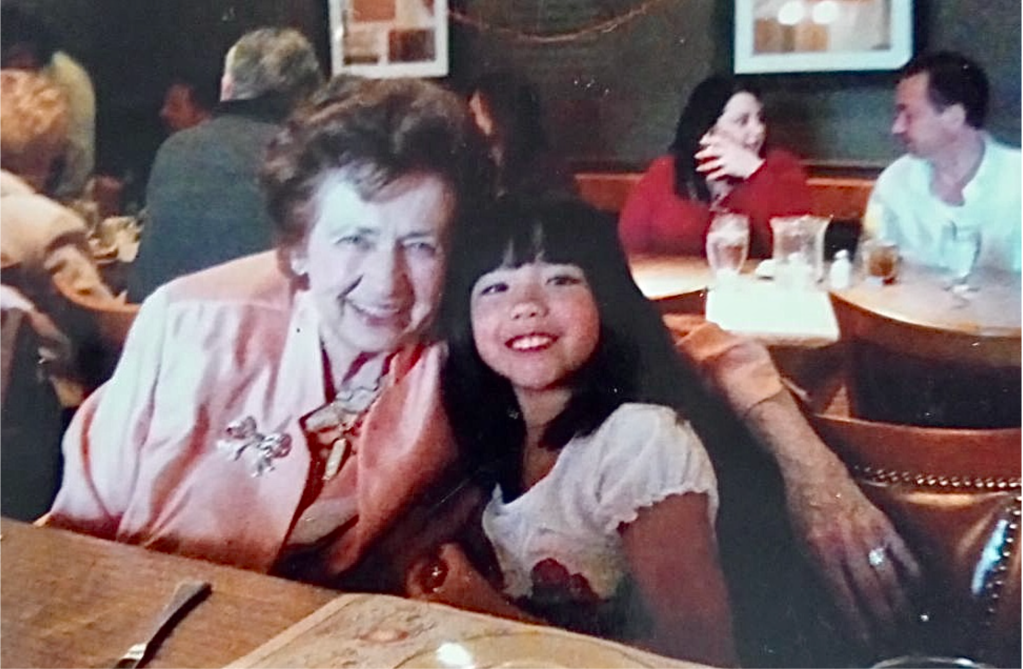
But as expected, the day came when I had to say bye to her. This one was a bit different from my grandpa. She had dementia for several years, and the decline was slow. I knew it was coming. I didn’t visit as much as I should’ve, whether it was high school in the way or simply my own discomfort that stopped me. What would I say to someone who couldn’t respond? I tried to figure it out when my aunt called us over to say our farewells.
“Hi Mimi, it’s Mark and Zoe. We’re here to see you, wouldn’t miss it for the world.” I hid behind my dad, letting him take the lead. He didn’t have much to say either. We shared the same heavy lump in our throats. This was it. We stood in her room for a while, my dad gently rubbing her limp hand and giving the occasional squeeze.
“Look, I can’t wait to see you again okay? Find me for a Scrabble game sometime, I’ll be there eventually.” Those were my dad’s last words to her. And knowing he wasn’t religious in the slightest, it stung a bit more. Even my atheist dad held onto the hope that he would see Mimi again. I started to cry, and my face burned with embarrassment and shame. Say something! But my mind was blank and my chest was tight. Through the sniffles and sobs, I got one word out as we left the room.
“Bye.”
And that was a start, but it was the end of my time with her. The guilt I carried out of the room with me told me that I still didn’t do it right.
“She loves you so much,” my aunt reassured as we made our way out. The guilt got a bit heavier.
Step 3: Ask yourself why you can’t say goodbye.
You will probably ask yourself why you did things this way for a long time. There is no guarantee that you will find an answer.
I have asked myself why for years. Why couldn’t I accept the reality of losing someone? Why do I physically feel restricted if I try to voice my emotions? Why do I feel shame when my sadness and anger are so overwhelming that I can’t conceal them anymore? I don’t know if I will ever forgive myself for how these situations played out. I was so angry for so long, at myself and at the fact that they had to die. I knew I wouldn’t be lucky enough to get a second chance, and I still couldn’t find the right words. I pride myself in how well I can communicate when things get rough, but in the hardest moments, my own character failed me. WHY?! Was I weak, or selfish, or too prideful to spill my guts at the last possible moment? These people meant everything to me, and I was still too afraid to tell them.
Truly, there are so many things I wish I could say, even just a thank you for everything they did in my life. I knew this wasn’t the right way to go about it. It took me a long time to realize that my burning anger was a part of grief.
Step 4: Revisit how you say goodbye. Say goodbye to the living.
Luckily enough, you will get a ton of practice saying goodbye to your friends. You probably won’t know that you’re saying goodbye, or that it’s the last time you’ll ever see them again. Decide if that’s for better or worse.
I think it’s for the better.
I can’t tell you about one specific instance of losing a friend. Each one carries so many complications and details that no longer matter. But the feelings remain, and it’s a painful spot that I revisit often. I find myself having the same conversation with myself time and time again. What did I do wrong? Sometimes the answer is clear. I overstepped a boundary, or I didn’t stop something I should’ve. But most of the time, I don’t get an answer. Left to my own devices to wonder if I could’ve saved it before it was too late. I start to question if I’m the only one who remembers all of the memories we made together. It doesn’t make sense that I am the only one who misses it. Was I really that bad of a person? Do I need to take accountability for more than I already have? Who do I still owe an apology to? With most of my former friends, I don’t get the chance to say goodbye at all. It’s already too late if you have to ask about newfound distance. The last conversations I had were relatively normal- small talk that gains more and more time in between responses until they are no longer there at all. But I don’t think silence counts as a goodbye. Shame on you.
And yet, my last conversations with my friends seem to haunt me almost more than my family. Part of me feels horrible for admitting that. But there’s something extraordinarily painful saying bye to someone that’s still there. Do you ever think of me too? Do you go to tell a story and feel a knot twist in your stomach when it’s one with me? Do you share the guilt? They chose to leave, and there wasn’t death to accompany it. The way I have said goodbye to them feels better than my family, but a new kind of shame comes with it. There’s a very obvious finality in death, and I know I’ll never get another chance. The “what if?” that comes with saying goodbye to people who are still around is what haunts me. I don’t know if I have properly said goodbye to the living, either.
Step 5: Forgive yourself.
This might be the most difficult step of them all. Try it out, and when it doesn’t work the first time, go back to Step 4. And go back to Step 4 again. Remember that healing isn’t linear. Stay in this loop as long as you need.
Maybe there isn’t a right way to do it. I have a funny feeling that I could find something to regret even if I tried to get it right over and over again. Let go of the anger that comes with knowing you cannot change the past. The anger is grief. Grief is love in a heavy coat.
Step 6: Say goodbye.
You can do it.
To my Pa-Paul, I miss you. I miss knowing you. I never got to know you as an adult, and I know I missed out. I can tell by the way my grandma talks about you. I’m sorry that you never got to see me go to high school or college. You would be so proud of me. I’m trying my best, and I still hold onto a sliver of hope that you can see me. I wear my ALS bracelet every day. It hasn’t come off since I got it- side by side with my diabetes bracelet. I’m sorry that you couldn’t win the fight against your disease. I think about how unfair it was to you. Someone who could fix anything, build anything, someone who painted my childhood room. How cruel that you lost your life in a way that stole your character too. I wish I knew you better. I know you loved me, and I haven’t forgotten. I’m so sorry I can’t say these things to you.
To Mimi, thank you for giving me 17 years of wonderful memories with you. Even the ones I don’t remember. You were an unbelievably talented and caring person. I don’t need specifics to know that. I wish I knew you now too. I think we’d get along. I keep a crystal angel hanging on my rear-view mirror for you (all your daughters have one too). Sometimes, when the sun hits it just right, it casts rainbows on me. I like to think that’s you saying hi.
And thank you for being such an incredible mother to my grandma. She still talks about you, too. How much she misses having your homemade lemon meringue pie and how your absence has never gone unnoticed. She misses her mother, and my dad misses his grandma, and I miss my great-grandma too.
To the friends I’ve lost, goodbye. I don’t regret knowing you, and I don’t look at our time together with anything other than love. If you have made me laugh, seen me cry, heard my worst thoughts, thank you. That is all I wanted. Our time together is never infinite. I’m not naive enough to think that I will keep everyone I have ever met. But I wish I did. I hope my presence in your life, however brief, brought something new. I know which of you didn’t give me the same courtesies or consideration. It’s okay. Through the anger and pain of losing you, I forgive you. I will let go of the negative to appreciate the positive, and move on with my life. I understand now.
And goodbye to the part of myself that can’t let go. I will cherish every good moment and memory I make as it happens, because I don’t deserve to wallow in misery forever. What good does it do? I can’t change it. I refuse to live in the past any longer. It gets in the way of appreciating the present. I will do better. I know how to say goodbye now.
 Writer To Writer Literary Journal