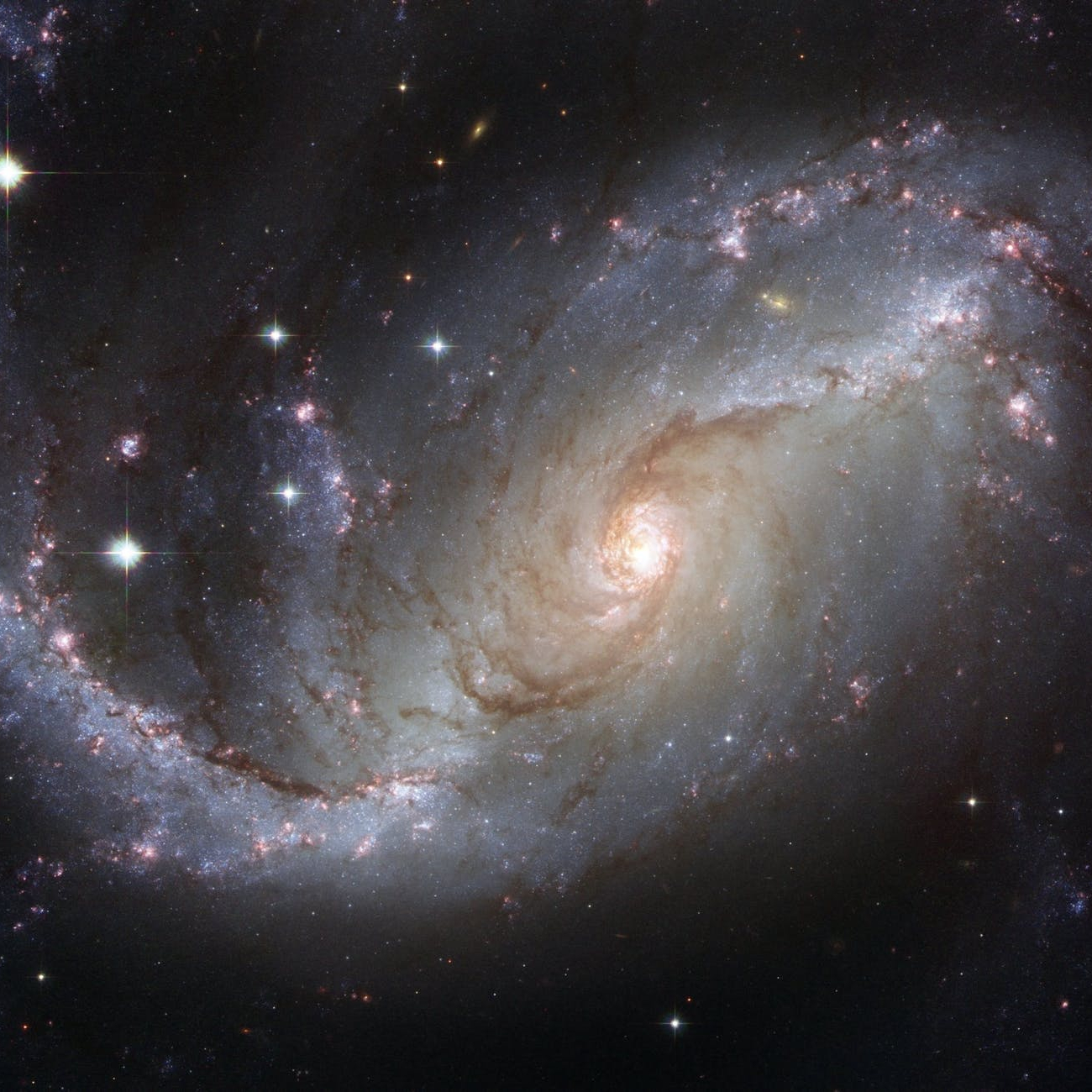
If you are reading this right now, then it must mean that I have died. If I have not yet met my inevitable fate at this point in time, then it must be because someone has taken and published my intellectual property without my explicit permission, and so I’d kindly like to ask you, if it happens to coincide with your intentions as well, to sue them to their graves.
Thank you.
Now, for the story. I sigh because, how do I even begin to tell it? How do I even begin to tell the story of that incredible, peculiar man? So stoic and indifferent, yet simultaneously so undeniably alive that he felt like a only caricature right out of my own head—how am I supposed to do that justice? You wake up from a fantastical dream and try to write it in words and this foolishness of a language fails you, because there is no way to describe a dream to its fullest extent. Things happened. They existed. They simply were. We flew to the Sun and leapt to the Moon like it was no different than any other day, for no reason grander than we could. And you can only understand something like that while it plays unfettered in your head because a dream is not dreamt in words—it’s dreamt in color, in the vibrance of life itself, and in the sound of your own, yearning soul.
There are no proper words for the vividness of that, but ironically I feel that ‘thoughtlessly’, perhaps, is the way I like best to describe it. We travel through the realm of a dream totally thoughtlessly. Life itself is best when we can go through it thoughtlessly. People are best when we can talk to them thoughtlessly. Dreams are best when they do nothing more, and nothing less, than exist, and we don’t have to think a single thing at all. Because with thinking comes worry, comes doubt, comes skepticism. If we could all go through this enigma of living without ever needing to think, then that would be the easiest life one could possibly live. Do optimists live like that? Or, perhaps, people who are simply too dumb to realize otherwise? I wouldn’t know. I’ll never know. I’ve been cursed to be a thinker all my life, just like so many of the people on this planet. I’ve been cursed with that incredible, unavoidable burden.
And so I’m left with this unsolvable problem on my hands, and the taste of my own insatiable hunger lingering in the back of my mouth. It’s a dilemma that’s impossible to overcome. I want to write. I want to tell this extraordinary story. I want to tell it and I want you to live it exactly the way I did, but a feat like that is utterly impossible. I might as well just label the thing ‘Lost In Translation’ and let it be forgotten. Just let it go. Just pretend as if that man had never existed. But I want to tell it. It burns away at me like hunger does in your stomach—hot and unquenchable and coming, almost mockingly, in waves. One moment receding, one moment roaring, and every day of my life slowly gnawing away like saltwater at my rusting insides. The more I try and leave it, the more I want to eat. The more I think about it, the more I have to think. And so I sit down, every day, and stare at that blank, unmoving screen. It stares back like the stars do, entirely indifferent to my fruitless turmoil. Every time I sit there, I don’t write a single thing; I can’t bring myself to. No matter what I put out, there will never be the satisfaction I so desperately crave. So I get up, pace around a bit, tell myself that that was the last time, that I’ll stop feeling this burning hunger by just never going back, and the only result I receive every time I leave is that I’m forced to immediately start thinking about it all over again.
So I have come to this place. Finally, I have come to this desolate place. It’s barren because I left it this way. I stand here alone on the salty plain of a nighttime desert, the air vaguely chilly on my skin. I want to say that it’s quiet, but there’s a dry, sandpaper-like sound coming from every direction, and I can’t tell if it’s the wind or if it’s snakes. And so it’s from this place that I take a breath, turn my head towards the sky, and watch, despite the rustling of the underbrush and the calls of coyotes in the distance, the Milky Way drift by. This is where I have arrived in order to make my final stand, my final cry for help where I already know none is ever coming. I am going to have to help myself. It will not stop unless I am the one to stop it, the wind and the coyotes and the hunger between us all, burning like tar in the pit of my stomach. So I will tell this story to you, despite the protests in my head. I will tell it to you, unfiltered, unedited, absolutely unadulterated, in all its godforsaken glory. Let us see it to its finale. Let us finally—I sigh to try and alleviate the tightness of my throat—let us finally see this story to its unceremonious end.
If all goes well, I will never have to read this again.
Hopefully, I’ll never have to think again.
Actually, I just remembered that I will already be dead by the time you read this, so truly, I won’t. I will have returned to nothing greater than cosmic dust and become totally, and finally, thoughtless.
How relieving.
I’ll take a breath before I begin, and I suggest you take one too. This story starts quickly, and it starts in a bar on downtown E. Sunset Street.
I had gone, as I had been going for the past couple weeks, to watch the bartender, Joy. She was a pretty woman, a little taller than me and of some ambiguous mixed descent that I was too lazy and too socially anxious to ask about, her black hair always pulled back in a ponytail. I had never been a drinker myself, but I’d walked in one day, curious, because whoever was on shift was playing Mozart on the company speakers. I was first intrigued by the musical selection, and then I fell in love with the mixed drinks. Not drinking them, but just watching them—the way the colors swirled and twisted like ink through the crystal glass, and the way each was a little bit different than the last. They were mesmerizing, especially to a quiet observer-type like me. So vibrant. So simultaneously potentially dangerous. I loved to watch them.
One day, a Tuesday night if I remember correctly, when I had exhausted the possibilities contained in an aviation cocktail after having laid on the counter and stared at it for about ten minutes straight, I, as I’d made a habit of doing, turned to the nearest bar patron and asked if he wanted the drink.
He was pretty well built, like he did fairly physical work on a regular basis, but not particularly tall, with a messy mop of short brown hair, greying in large streaks, and a permanent frown, etched into the corners of his mouth. Stubble stamped his tired face and his eyelids drooped sleepily, but he still seemed surprisingly alert, scrutinizing me with eyes so dark I couldn’t tell where his irises ended and his pupils began.
“You think I’d take that?” he said, somewhere between annoyed and indifferent.
I shrugged.
“I haven’t touched it,” I replied.
He snorted.
“Can’t know for sure,” he replied, turning back to his scotch glass.
I paused, then nodded. Rational.
“I just didn’t want it to go to waste,” I reasoned. “Joy, would you like it?”
“Not today, Ana,” she replied, shaking her head with a polite smile. “But thank you for the offer. Would you like me to dump it?”
I hesitated for a moment, thinking over whether I wanted the maraschino cherry sitting at the bottom of the martini glass, before finally deciding.
“Please do,” I answered, nodding. “Thank you.”
She smiled again, calmly taking the glass by the stem and moving back down the counter.
The man beside me snorted in my direction.
“You got enough money to be wasting it like that?” he asked, less condescendingly than his
words would imply.
I shrugged.
“Fortunately,” I responded. “I wouldn’t be doing it otherwise.”
“Oh?” He sent me a sideways glance. “You a doctor? A lawyer?”
I paused for a moment, weighing how invested I wanted to be in this conversation. I’d been preparing to leave the bar, after all, but I also had time to spare. No loss.
“No,” I answered, lacing my fingers together across the wood counter, “I’m a writer.”
“Oh?” he drawled, swirling the glass in his hands. “Is that so?”
I raised an eyebrow, surprised he had just ended it there. “You’re not going to ask what I’ve written?”
He shrugged, indifferent.
“I don’t read.”
I paused, taken aback slightly, then chuckled lightly.
“I suppose that’s fair.”
He glanced at me again, studying my face.
After contemplating for a moment, he finally asked, “What’s your name, kid?”
I looked over at him, watching his expression too. It was nearly entirely neutral, no malice or curiosity or much of anything at all. I judged it to be safe.
“Analiese,” I answered, turning away again.
“Quite an old-timey name, huh.” He took a sip of his liquor. “Didn’t think anybody had been named Analiese since the Middle Ages. So whatcha write, kid?”
The corner of my lips twitched at his remark, but I didn’t think particularly much of it.
“Books,” I answered, leaning a hand under my chin, “fiction, mostly. Mixed with fantasy here and there.”
“The fake stuff.”
I snorted. “Yeah, the fake stuff.”
He nodded, though he didn’t look away from his glass.
“Won’t ask for any titles ‘cause I probably won’t know ‘em anyway.” He took a sip. “How’d you get into the business of writing? Are you one of those kids that pretend it’s your calling in life or something?”
I frowned a bit, but I knew what he was talking about.
“I don’t think it was my calling or anything,” I replied, leaning forward on the counter. “I still don’t really think it’s my calling. It just kind of, I don’t know, happened. It was just a thing I did for fun while I was still in school, and I kind of just let it happen, I guess. Nothing particularly dramatic.”
He hummed, amused. “For fun, huh. What were you supposed to be doing in school?”
I paused, thinking back.
“I was actually an astrophysics major,” I answered, nodding slightly to myself.
He raised an eyebrow. “For real? Rocket science?”
“Mhm. Rocket science. Well, more like space science, but that’s the gist of it.”
He took a breath, then exhaled as if puffing smoke from a cigarette.
“Man you’ve got both sides of that spectrum covered, don’t you, kid?” he remarked, not particularly enthusiastic despite his words. “Quite a life.”
He took a swig from his glass and set the empty cup back onto the counter, ice cubes rattling inside.
“It is quite a life,” I responded after a second, glancing at his hand. “I can do both without really choosing either.”
He cocked his head to one side.
“Both?” he asked. “You still do rocket science?”
I shrugged. “A little bit. I loiter at the university planetarium sometimes when no one else is around. Helps me think. It’s also nice to watch the stars. Fake or not.”
He inhaled like he really was taking a drag from a cigarette.
“Stars, huh…” He leaned back on his stool, gaze turned towards the ceiling. “Don’t remember the last time I saw any. S’always cloudy in the city.”
“Smoggy, yeah,” I agreed, “plus the lights are always on. Pretty much the only consistent thing you get through that is Mars.”
He raised an eyebrow, frowning.
“You can see Mars?” he asked.
“Mhm. It’s almost due south this time of year, bright red.”
He turned back, closing his eyes.
“Guess I never really thought about it, huh. Assumed just about everything up there was a star.”
I shrugged.
“Happens,” I replied, nodding. “Most people do. But there’s even galaxies up there, you know. That you can see with the naked eye.”
He cocked an eyebrow at me. “You’re joking, kid.”
“I’m not. The planetarium’s open this Friday if you wanna see.”
“For shows?”
“Yeah.” I nodded. “If you stay late enough, I could also just show you manually on the screen.”
He hummed, thinking.
“When this Friday?” he asked. “I’ve got a job.”
“Six to eight,” I answer. “I’ll be there loitering.”
He glanced back at me, watching my expression.
“You trust this random man at a bar enough to invite him there?” he asked through questioning but drowsy eyes.
I pursed my lips and leaned forward on my palm.
“Dunno if it’s ‘trust’, per say,” I replied, letting my gaze settle on the liquor bottles sitting on glass shelves across the bar. “‘Trust’ is too strong a word. You just seem harmless enough.”
He paused for a moment, almost surprised, then laughed out loud, each iteration a full-chest, clear-cut “Ha!”
“Harmless, huh?” he remarked, grinning to himself. “Harmless. Sure. That’s me.”
I raised an eyebrow, but he wasn’t looking.
“Should I be on the lookout for you?” I asked, half-joking.
He waved me off.
“Nah,” he replied, “not at all. At least I hope not. You shouldn’t know about me.”
What colloquial, shady talk. I calmly sent him a sideways glance.
“What’s your name then, dear sir?” I asked humorously.
He cocked his head, watching the remaining ice as it melted in his glass, as if his eyes couldn’t find anything else nearly as entertaining.
“It’s March,” he finally answered, not looking my way.
I leaned my chin on my palm.
“March?” I asked. “Like the month?”
He snorted. “That’s what they always ask, huh. Yeah, like the month. You know another March?”
The verb, technically, but there really wasn’t any point in mentioning it.
I shrugged. “Guess not.”
He blew a breath out of his nose again, then shifted and stood from his stool, gathering a dark grey wool trench coat around his shoulders. Judging by the way Joy didn’t immediately slide over and politely hound him for his bill, he must have paid ahead of time.
“Whatever,” he said. “Doesn’t matter. I’ll see you around, kid. It’s gettin’ late. I’ve got a job.”
I raised an eyebrow.
“Same as the job you mentioned you have on Friday?” I asked.
“Related. Not the same.” He dug a couple bills out of his pocket and slapped them on the counter. Tip.
“You sure you can do it while tipsy?” I continued, tilting my head up at him.
He huffed gruffly.
“Not tipsy, kid,” he retorted, the frown lines around his mouth coming into definition. “Just right. Always gotta get a few drinks in before work. Loosens me up.”
I narrowed my eyes, my gaze following him as he moved towards the exit. ‘Loosens me up.’
There was a sport, I remembered, that had alcohol banned as a performance-enhancing drug.
“What, exactly, if I may ask, do you do for work, March?” I asked as calmly as possible, admittedly a bit concerned. Not because he was was ever-so-slightly intoxicated.
Because the sport was sharpshooting.
He glanced over his shoulder, scrutinizing me with those dark, drowsy, yet calculating eyes—weighing something in his head.
He blinked, and I saw that he had decided.
“That’s a secret,” he answered curtly, turning away and heading for the door. “Enjoy your night, kid. I’ll see you on Friday.”
***
Like it did every Friday, the planetarium show ended before it got dark outside. Ironic, I’d always thought, in a way. Perhaps it was to prevent people from walking back into the city and realizing with a jarring slap to the face how much we’ve ruined the sky. Or perhaps it was to prevent them, almost innocently, like shielding the eyes of a child against the brutality of the world, from remembering that everything they just saw in that tiny, domed theatre, the stars and the galaxies and the universe in its entirety, was no realer than pixels on a screen. Or perhaps it was just because the staff didn’t want to stay that late for the sake of a few families with their loud, wide-eyed kids, or for the intermittent, stressed university students who had realized they could wiggle their way in for free because somewhere in their exorbitant tuition bill, it had ‘planetarium shows’ listed as prepaid. Pick whichever reason you like best. No matter which one it was, the result was that everybody had already cleared out of the place by 5:55 PM, save for the ASTRO 104 professor, grading and meticulously organizing assignments in the lecture hall on the other side of the not-actually-soundproof wall, and me.
I nodded to the part-timer, a sophomore if I remembered correctly, as she exited, leaving the standard night sky display on for me. It was what the night sky would’ve looked like from where we were if we hadn’t put the city and the sound of cars and lives in the way, and I liked the way it looked over me with absolutely no feeling at all.
The stars twinkled a welcome as I walked in and sat on the stool behind the control monitor.
They didn’t twinkle like that in real life, but people liked to think they did. It made for a good show.
I leaned back and opened my laptop. The darkness made for good productivity, and I had until the professor next door finished grading and locked up for good, normally around eight. By no means a great amount of time, but better than nothing. And by the time I was forced to leave, the sky really would be dark already, so I would no longer need to trick myself into thinking so. It was a convenient plan, and it kept me occupied under a faux sky of stars for two hours every Friday. So occupied, in fact, that I forgot I’d even invited someone to come until just a little before eight, when I heard the door click open again and assumed at first that it was just the professor coming to clear me away like he always did, even though he never used the main door.
“Oh, it’s you,” I said once the man turned the corner, shrugging a thin layer of snow off the shoulders of his coat, probably some of the last of the year. February was nearly over.
“That’s all the welcome I get?” His voice was just as gruff as it had been while slightly tipsy.
“Welcome then, I suppose,” I replied, chuckling lightly. “It’s almost eight. You might not be able to stay long.”
“Couldn’t help it.” He took his coat off, wincing a bit partway. “Job dragged on overtime.”
“Oh yeah?” I glanced up. “What’d you need to do for it?”
“Secret, kid,” was all he responded with. No dice, huh.
I sighed, resigning, closed the lid to my laptop, and turned to the control monitor, shaking the mouse to rouse it. “Anything you want to see then, while we still have time?”
He stepped into the seat aisle, eyes craned upward.
“Up there?” he asked.
I cocked an eyebrow. “Yeah, up there. You can sit, if you want. The chairs lean back.”
He shook his head slightly. “I’m good.”
I wasn’t entirely sure what to make of that, but I kept quiet as he studied the domed ceiling, not with awe like spectators usually had, but with more of an expression of indifference, like he was soaking up practical information instead of reveling in it. I wondered how. I hadn’t even been immune to that.
“You mentioned galaxies last time,” he said, “ones you could see without telescopes or anything.”
“Want one?” I asked.
He didn’t say anything, didn’t even move. I didn’t know how exactly to respond, so I took it as a ‘yes,’ pulled up the ‘options’ window on the software, and disabled stars and planets.
The sky went dark. It was that kind of awkward, fake dark that wasn’t truly black because it was still coming off of a screen, but after sitting under the light of thousands of stars and the Milky Way, it suddenly felt a little bit lonely.
His brow furrowed.
“There isn’t anything,” he said.
“There is,” I replied, clicking on the green laser pointer that the guides used and focusing it on an inconspicuous smudge on the screen. “Like this one. The Large Magellanic Cloud. And this one down here is the Small Magellanic Cloud.”
“They’re so… boring.”
“Are they?” I glanced up into the dome. The smudges were barely any lighter than black. “I guess they’re not much to look at. Those two are dwarf galaxies, passing by far, far outside of us. This one—” I moved the pointer over to another smudge, smaller but brighter than the others. “—this is M33, the Andromeda Galaxy. Our closest large neighbor. A little bigger than the Milky Way, in fact.”
“It’s tiny,” he stated bluntly.
“It is,” I agreed, glancing up at the dot, “and we are even smaller. There are hundreds of billions of stars in there, you know, in just a smudge in the sky.”
He frowned. “I find that hard to believe.”
“Really?” I replied, raising an eyebrow. “I find it quite remarkable. The smallness.”
He blinked slowly, not moving his gaze from the screen.
“Still,” he continued, frowning, “that tiny thing’s a galaxy? With shit inside?”
I chuckled lightly.
“It is,” I replied, “with shit just like any other. If it makes you feel any better, that tiny thing’s getting just a little bit bigger every night.”
He made a sour face. “It’s growing?”
I shook my head. “It’s coming closer.”
He raised an eyebrow. “Towards us?”
“More like at us,” I corrected, leaning back on the stool. “In about four billion years, our two galaxies are going to collide.”
“Four million years?”
“Four billion years.”
His brow furrowed and he glanced down, gaze unfocused on the seats in their rows.
“Four billion years…” His voice sounded lower and more gravelly than it had been, as if he’d
aged with just the concept of that large a number. “That’s a long time.”
I studied his face, then shrugged.
“I suppose it is,” I answered calmly. “Even in terms of the universe, four billion years is kind of a long time. But our universe is young, and four billion years will happen. One day the Milky Way won’t be the Milky Way anymore.” A thought struck me. “Ah, but, the Earth might still be around by then.”
He frowned.
“Isn’t the Sun gonna like, I dunno, swell up ‘n eat us or something?” he asked. “Thought I heard that somewhere before.”
I nodded. “Yeah, it will. But that won’t happen for five billion years. We’ve got a little leeway.
I wonder what it’ll look like from here by then.”
He snorted, glancing over at me.
“You act like you’ll be there to see it,” he remarked.
I shrugged.
“I doubt humanity will even come remotely close to that amount of time,” I replied. “I just like to wonder. That is an author’s job, after all, and I’ve got nothing better to do.”
“You could be a space scientist,” he pointed out.
“I could,” I agreed, “and you probably could be something else too. The entire world’s got to pick ‘n choose, and unfortunately not all of us have four billion years to spare. At best, we’re just doing what we can.”
“At best?”
I hummed. “Yeah. Since we can’t do anything more.”
He studied me for a second, then shook his head.
“I don’t get you, kid,” he said, looking back up into the dark ceiling of the planetarium. “How old are you?”
I paused momentarily. “Twenty-five.”
He kept shaking his head.
“You sound like an old lady,” he stated bluntly.
“Maybe it’s the name,” I replied jokingly. “Maybe I was really born in the Middle Ages like you said, and just nobody remembers it.”
He regarded me calmly, quietly, like he was turning something over in his mind, not even fully consciously, and the thought was coming to pass at the speed of rolling molasses.
“Not even you?” he asked, eyes vaguely unfocused despite looking my way. As if he was only addressing the wall behind me.
I blinked slowly, wondering if I should smile.
“Least of all me,” I finally answered.
He paused, seemingly mulling over what I’d said. Yet I felt as though he hadn’t truly heard me at all, that he hadn’t truly been thinking at all—like he had already subconsciously decided upon an answer before I’d even said it, and, judging by how there was no reaction written on his face, we’d coincided upon the same thing.
Next door, I heard a loud thunk. The professor had finished alphabetizing the papers and was thumping them against the desk to straighten them out, like he always did. I saw the fog clear a bit out of his eyes at the sound, as if part of his occupied brain had to redirect in order to register it, and I wondered if he would’ve said anything had it not been heard—if a fake, starless sky had been enough to loosen his lips like smoked scotch.
I doubted it. And even if he would’ve, nothing was going to come out now.
“That’s the astro professor,” I broke in, leaning forward and placing my hand on the mouse. “He’s gonna kick me out soon. Is there anything else you wanted to see?”
His eyes snapped back into focus, but he didn’t even glance up into the dome, only shaking his head as if to clear it.
“No, no there isn’t,” he replied, gathering his coat. He sounded old, and even though I could see that his hair was already slowly greying, he actually sounded old to match it now. It was as if seeing something bigger than us framed so insignificantly in the sky had put lead weights on his shoulders, and he hadn’t been born or been made enough of a thinker to comprehend it. “I didn’t really come here for anything anyway, kid. Just… just killin’ some time.”
I chuckled lightly.
“Your job seemed busy enough,” I remarked. “Surprised you had the motivation left after working overtime to stop by.”
He shrugged.
“Wouldn’t call it motivation,” he said, buttoning his coat up the front.
I raised an eyebrow. “What would you call it, then?”
He thought for a second, then snorted, turning towards the exit.
“Kid,” he addressed, eyes hooded in half-sarcasm, “don’t ask me word questions. I haven’t known anything a day in my life.”
I laughed, leaning back on the stool. “Well isn’t that just remarkable?”
He huffed, turning away. “Whatever. You leaving?”
“Nope,” I answered, moving back to the computer. “I have to shut down the projectors and everything too.”
He paused, then shrugged. “Okay then, kid. I’m leaving.”
“Alright,” I replied, resetting the software. “I’m here every Friday, if you ever want to see anything else.”
He studied my face for a moment, or rather, I felt him study my face, before he turned and headed for the door.
“Sure, kid,” he said, hands in his pockets. “I’ll see you around.”
The door opened with a curt, succinct click, then slowly, quietly, slid shut again.
***
He didn’t visit for the next couple of weeks—just long enough, in fact, that I think I subconsciously assumed he wasn’t coming back.
I walked in as usual once the sparse stream of viewers flowed to an end, nodded to the part-timer as she left the display on for me, and settled down at the control monitor. It wasn’t very long after six that I heard the door click open again, and I guessed that it was only a previous patron coming back to retrieve something that they’d forgotten in the seats. It wasn’t until I realized that there hadn’t been any sound of them leaving that I even bothered looking up.
March was standing where the hallway met the theatre, quietly waiting for me to realize his presence.
“Oh,” I said, mildly surprised. “You’re back.”
He nodded.
“Was passin’ by on my way to a job,” he explained.
“What kind of job?” I asked. “Overtime again?”
“Maybe,” he replied gruffly, “dunno yet. Guy looks like a pushover to me though.”
“Is that a good thing?”
“Yeah, it’s a good thing.” He snorted. “I don’t like his face either. Makes finishing up a lot
easier.”
I hummed, wondering how blatantly I could press him.
“What do you mean by ‘finishing up?’” I continued. I had to force myself to ask it under a veneer of innocence; I’d never been very good at being pushy.
“Don’t worry about it,” he responded curtly.
I looked over, and he didn’t meet my gaze, only staring off into some vague point on the far wall.
“Alright,” I ceded, turning back to the monitor and setting my hand on the mouse. “Was there something you came by to see today?”
“Nah,” he responded, looking up into the ceiling, “just passin’ by.”
I paused for a moment, then nodded. “Okay. Tell me if anything comes up, then.”
He didn’t answer, and I took it as permission to turn back to my own laptop screen. It was barely six, after all. I still had time to work.
A few minutes passed, or at least I think it was a few minutes, before I realized I’d zoned out entirely and completed absolutely nothing. The cursor blinked rhythmically back at me from an unchanged page, left hanging unceremoniously at a line break. I kind of stared at it for a moment, knowing I was getting nothing done by doing so, and just let myself drift into that half-asleep, half-awake phase. Once I finally mustered up the energy to move, fueled by the inevitable guilt of wasting precious time, I shook my head and squeezed my eyes shut, hoping it would clear the static away. My eyes fell back onto the screen, and I consciously felt them lock onto the blinking cursor and immediately fuzz out of focus again. No good. Nothing was going to get done like this.
I took a breath, sat back, stretched, and saw March still standing there, staring wordlessly up into the ceiling through hooded eyes. And I wondered if, in that moment, like me, he was thinking nothing at all as well.
He noticed my movement, but his gaze didn’t move.
“Kid,” he addressed, “I’ve got a question.”
I settled my hands on my laptop keyboard, wondering if I should’ve moved them to the planetarium monitor. “Ask away.”
“The, uh, sky,” he started, nodding up to it, “is this what it really looks like?”
I tilted my head, confused as to what exactly he was asking. “What do you mean?”
“Does it, I don’t know, does it always look like this? Like—” He made a vague gesture with his hand. “—like if we took the clouds ‘n shit away, would it look like this?”
I hummed. “Mhm. It would.”
“And this is all just… sitting up there? Up in the big blue? And we’re just here not seein’ it?”
“Yup. That’s what happens in the city.”
He paused for a moment, eyes narrowing and brow furrowing just the slightest degree. It was like a thought had settled slowly in his mind—and it looked to me that it wasn’t something particularly pleasant. It was something that made the corners of his lips prick outwards a bit, as if a bitter taste had landed on his tongue.
“So bright ‘n cheery,” he remarked, gaze trailing the stars as if they were tracing paths across the sky in a timelapse, despite the fact that they were moving live, and far too slowly for the human eye to detect.
“You think?” I said, following his gaze up into the ceiling.
His eyes narrowed.
“Just look at it,” he replied. “Bright ‘n cheery. Kinda pisses me off.”
I hummed, cocking my head to one side.
“It’s pretty, yeah,” I agreed, “but I don’t really think it’s quite… ‘cheery’—well, I can see where you come from though.”
I blinked, thinking for a moment, and tilted my head back, my gaze traveling upwards, slowly finding an arbitrary place that seemed enough like the very tip of the domed screen, the very highest point, and coming to a calm, trailing stop. There was nothing spectacular there. It wasn’t even the actual celestial pole either. Just an ordinary place in the sky like any other.
My breathing slowed, and I felt the muscles around my cheeks, unconsciously tense, relax.
“Do you not like it?” I asked, not quietly but not particularly purposefully either. “When it looks so bright and happy?”
He hesitated a moment, his brow faltering.
“I don’t… like it,” he finally answered.
“But you don’t dislike it either, do you?” I continued, letting my eyes fall back down onto him. He wasn’t looking at me, and I realized suddenly, in that moment, that I felt far more like a bystander than a character in a story, and I was only watching it unfold from ten feet and a screen away. It was a strange understanding, but before I even consciously knew it, I was instinctively, almost despicably, already wondering where the story could possibly go.
Fitting, perhaps, for an author. But I knew even then that it was impossible. I felt it in the air, in flickering pixels above us, and in the marrow of my bones. I felt that I wouldn’t be able to see the conclusion to the story of a person I’d only met thrice in my life, who outwardly seemed no more than an aging old man looking for ways to get away from work, and the idea felt vaguely disappointing. I wanted to see it.
“I think I dislike it,” he replied, snapping me back to focus.
I paused a moment to take his answer in, then chuckled lightly.
“I think you’re the first person I’ve ever met who dislikes it,” I responded. “Space is always one of those things that nobody really hates, they just might not think much of it. Like listening to music or riding a bike. Nobody’s really against it. Even so…” I turned my eyes upward, tracing the slanted path of the Milky Way down to the horizon. “…I think I still sort of understand what you mean. Though I might be mistaken.”
He glanced over at me for a moment, studying my face, before flicking his gaze and his head away again.
“And what do you think I mean, kid?” he asked, voice surprisingly calm and indifferent despite how biting his words had the potential to be.
I hummed, placing a hand under my chin.
“I think…” I started, trailing off as I tried to connect my thoughts into a linear sentence, “…if it looks happy at all, then to you it looks too happy. If it looks happy at all… then it looks like it’s laughing.” I blinked slowly, weighing my head from side to side. “Like heaven is mocking you, and it starts to make you mad.”
My eyes moved back to the domed screen, locking, without much thought, on Sirius, just above the southeastern horizon. A familiar star. The brightest of them all.
“I guess,” I continued, thinking out loud more than anything, “that it must look to you like there are gods up there, and that they have never cared a day in their lives. It’s bitter.”
Silence fell for a moment, and I wondered what he was thinking, or if he was thinking anything at all.
“You say such pretty words,” he finally remarked, sounding more like he was just stating a fact than criticizing me.
“I’m a writer,” I agreed, nodding calmly. “That’s my job.”
He hummed, pensive, as if my answer hadn’t really affected his train of thought, simply staring silently up into the pixelated universe without saying anything back to me.
“If it irks you,” I began, not entire sure where I was going, “do you think the entire universe looks this way? This bright.”
He raised an eyebrow. “Yeah. That’s just the way it is, ain’t it?”
I hummed.
“Now that I think about it,” I said, resting my chin on my palm, “I used to think it was that way too, before I started learning about it. Did you know there aren’t any stars between galaxies?”
“There aren’t?” he asked.
I shook my head. “Nope. Not in large quantities at least. As far as we can definitively detect, there’s nothing consistently there. No stars, no planets, no asteroids. Maybe some cosmic dust every once in a while.”
I tilted my head slightly, leaning into my hand, and looked up into the software-generated
night.
“If we were to hypothetically travel from here to Andromeda,” I posed, “the sky would not get more brilliant or more full. We’d see less and less, until eventually we’d see barely anything at all. No more than a few smudges in the sky. Andromeda, the two Magellanic Clouds, some inconspicuous dwarf galaxies, and, if we were to turn back around, the Milky Way.”
I paused, taking slow, deep breath as I stared up at the vivid, distinctive splash of gas and dust that split the screen on an slant, rising from one horizon, then setting on another.
“Despite what we assume it to be,” I continued, quietly and halfway speaking to myself, “despite what the movies and the books have said, and despite how it seems so bitter to you, it’s really not anything like a fairytale. The universe is a dark place, a very, very dark place. We seem to have assumed that if we were to randomly pick anywhere in the cosmos and go there, it would look just the same as it does from the Earth—thousands of stars visible to the naked eye, interrupted by something as magnificent as the Milky Way. But it wouldn’t. Chances are, you wouldn’t see anything at all. Nothing but black.”
His eyes were lowered, calm, but pensive.
“It’s dark?” he asked, voice low.
“It’s dark,” I confirmed with a nod.
His gaze didn’t flicker, and if anything, it seemed to settle—eyelids hooded and the corners of his lips slowly relaxing. I wondered if he liked the idea that the universe was empty better than the idea that it was full. I wondered if he found comfort in the desolation.
I considered, for a moment, turning off the stars again, thinking that maybe really seeing it would trigger something inside him. But I decided against it, or rather, didn’t decide at all—simply remaining still, sitting there and waiting for him to say something, as if he’d say anything at all.
He stared, for I don’t know how long, at the stars. Searching for what, I also couldn’t tell. It looked to me almost as if he was trying to come to terms with it, not the darkness I had spoken of, but the brightness that was there—the brightness that irritated him by doing no more than exist. It seemed as if he was trying to find a halfway point between himself, standing so sedentary on the surface of a tiny planet, and them, out there, quiet, and continuously watching. A point where they’d stop annoying him, and they’d just go back to being stars again. I wondered if that point had ever really existed, or if the sky had simply never been clear enough for him to think about it before.
When he finally spoke, I didn’t know how to read it.
“I, uh, I’ve got to go,” he said, taking a step back. His voice didn’t falter despite his words.
I blinked, unsure of what to say back for a second, then nodded lightly.
“Alright,” I responded. “Job calls?”
“Yeah.” His eyes seemed to tire a notch. “Job calls.”
“My condolences,” I remarked, half humourous, “both to you and the other guy involved.
The, uh, pushover.”
He snorted.
“He doesn’t need your condolences,” March stated. “If he’s on my list, he probably doesn’t even deserve them.”
I shrugged with a chuckle.
“That’s fine,” I replied. “Send him my condolences anyway. He can use them at his will, on his own time.”
He paused, scrutinizing me with those black-brown eyes of his, then turned away.
“Whatever, kid,” he said, making his way towards the exit. “We’ll see.”
I studied his expression, shaded away from the minimal light of the planetarium screen, and sighed lightly.
“Alright,” I ceded. “I do hope he receives them while he still can.” I calmly turned back to the planetarium monitor, shaking it awake again. Quietly, and not entirely directed at him to hear, I added, “I do hope that you do as well.”
I didn’t know if he discerned it, but he paused momentarily, and snorted.
“Sure, kid,” he remarked, turning back towards the way he’d come in. “I’m sure he’ll need ‘em.”
“Mhm.” My gaze moved back to the still unchanged on my laptop screen, fingertips settling once more, inert, on the keys. “Good luck.”
I saw him wave out of the corner of my eye.
“Yeah,” was all he said back.
The door clicked open again, and I didn’t hear the sound of it closing because by the time it had snapped shut again, I had already begun to write.
***
The next time we met was not nearly so docile. The next time we met, I heard the door slam open, as if something had crashed into it, and saw the light of the corridor outside splash
across the floor around the silhouette of someone hunched over and clutching their side.
I froze. I probably should’ve put my laptop aside and rushed over, but I had no training, no experience, in anything close to this kind of situation, so I simply sat there frozen. Because despite the seemingly otherworldliness of it, I think I already knew who it was.
The light spilled across the floor narrowed to a sliver as the door swung shut again, and at practically the same moment it clicked closed, I heard the sound of something thudding to the floor.
I quickly shifted my computer from my lap to the table and moved to investigate.
It was March—sitting with his back pressed against the wall as if he’d slid down it, grimacing and catching his breath.
“Are you alright?” I asked. I didn’t know what else I could’ve possibly said.
He nodded slowly.
“Yeah, I’m fine, kid. Just takin’—” He flinched. “—just takin’ a rest.”
I glanced down, concerned. He had a hand placed under his coat and over his side as if something had hit him there, and I didn’t feel like I had the power or the place to ask what. But his shirt, already dark to begin with by color and by the darkness of the planetarium, was even blacker under and around his hand. It was seeping into the wrinkles around his knuckle joints like tendrils, and I doubted it was because somebody had spilled coffee on him.
“Are you sure you don’t want me to call an ambulance?” I asked, looking pointedly at it.
He waved me off. His hand was smeared with black, which, if I were to flick the lights on, I’m sure would’ve turned deep red.
“I told you I’m fine, kid,” he responded, voice surprisingly steady. At least he sounded fine. “It’s just a scrape. I’ve been in the business long enough to know. I just happened to be around again, so I thought I’d drop a visit.”
“To rest,” I reminded.
“To rest.” He grimaced slightly as he stretched his side out a bit. “I’m startin’ to get too old for this kinda stuff.”
I studied his expression.
“Can you stand?” I asked.
He put his free hand against the ground, as if about to push himself back to his feet again.
“Yeah, that’s how I got here. You want me to?”
I shook my head.
“No,” I replied, “but you’re going to need to leave by 7:30. I don’t mind, but if the professor busts in and sees you half-dead on the floor he sure as hell is going to.”
“We can’t have that, now can we?” He sounded vaguely amused.
“Better for both of us that no one notices. Wait—how have you been walking around like that anyway? How’d you make it through the building with no one noticing?”
He gathered his jacket around him, covering it. It was darker than his shirt was.
“Coat’s black already,” he explained. “Nobody bothered to look close enough. Not many people here to begin with, anyway. And if an old man’s slowly staggering around, then it’s just because he’s an old man.”
I pursed my lips.
“You’re not that old,” I remarked.
He chuckled. “I’ve already gone past my life expectancy, kid. I’m old enough.”
I studied him calmly, then, humming, I leaned my back against the wall and slid to the floor as well, coming to a stop, legs outstretched, sitting across from him in the hallway.
“I see,” was all I said. Anything more would’ve been unnecessary, or out of my own selfish, prying nature. He had already told me enough.
A silence settled, only rhythmically interrupted by the sound of him steadying and calming his own breath.
He didn’t sound hurt, I noted, feigning neutrality but also subconsciously convincing myself that I hadn’t made a mistake by yielding and not calling 9-1-1. He just sounded tired.“Kid,” he finally broke in, “tell me something.”
I perked up, raising an eyebrow.
“About what?” I asked.
“About anything,” he answered, leaning his head back against the wall. “About everything.
About the stuff you always tell me about.”
I tilted my head, glancing over to the planetarium at the end of the hall, still projecting the universe onto the screen in a now empty theatre.
I curled my legs in, leaning forward and lacing my fingers together under my knees. I didn’t look at March, instead turning my head and fixing my gaze on some vague point in the theatre, and I think it was because, in that moment, I felt like I wasn’t only addressing him, but also however much else of the universe just happened to be listening in at the same time. I needed, too, to acknowledge the clouds, the stars, and the southern sky, framed, from where I sat, into a distinct square by the shape of the hallway.
“We…” I began, speaking before I had even registered the word as a thought, “…we live in the middle of nowhere. 8.5 kiloparsecs from the galactic center, about two-thirds of the way out, on one of its arms.”
He squinted.
“I think I knew that,” he commented,. “tThe arm part. Heard it on, uh… TV somewhere I think.”
I nodded. “It’s not an uncommon trivia point. But we’re also 1.3 normal parsecs from the nearest star, Proxima Centauri. That’s twenty-five trillion miles, and that’s the closest one we can get.”
“Trillion?”
“Trillion.”
I leaned forward, placing my hands on my knees and my cheek on my knuckles, head turned to the side and towards the planetarium.
“Plato, Aristotle, Ptolemy…” I continued, quiet without intention, “…all these men associated with higher thought and cosmic enlightenment, they were all wrong in the end. We don’t live at the center of the universe. We don’t live at the center of anything. All of humanity and all of life as we know it has existed for billions of years, and will continue to exist for billions more to come, in the middle of nowhere. Our local galactic neighborhood—Andromeda and the Magellanic Clouds I mentioned a while ago—is average in the universe. The Milky Way as well is as big as it is small. The Sun is just another normal-sized star going through its normal, predictable life cycle. There is nothing spectacular about this place.”
“Not even the fact that there’s life on it?” March asked.
The corners of my lips pricked upwards unconsciously.
“Not even that,” I answered. “Life, actually, isn’t uncommon. Intelligent life, or at least what we consider to be intelligent life, might be, but life in general—you could very well stumble upon that every few solar systems you go to. It finds a way.”
He paused, as if letting the idea settle in his head.
“So you’re telling me,” he began, calm, “that after all this time, after all the scientists and the
preachers and the Greeks, the answer to all their crazy, cosmic questions is that we’re just really nothin’ special?”
I smiled.
“Nothing special at all,” I affirmed, “with a sun that’s nothing special, in a galaxy that’s exactly like so many others. We are ninety-three million miles from the center of the solar system, twenty-five trillion miles from the center of the nearest star system, and 8.5 kiloparsecs from the center of the galaxy. We live at the center of nothing at all.”
I waited a few seconds, but he didn’t say anything back. I turned my head and glanced over.
“I don’t know what to feel about that,” he said.
I raised an eyebrow.
“You didn’t know we weren’t the center?” I asked.
He shook his head quickly.
“Of course I knew,” he retorted. “You just make it sound so much worse, what with your sciencey mumbo-jumbo. You make it sound like we don’t matter at all.”
“That’s because we don’t,” I stated bluntly. “On the scale of the universe, or rather, on the scale of everything outside of our immediate solar system, the existence of humanity is totally meaningless. Do you think it’s a bad thing?”
He rolled his head to one side, gaze trailing across the opposite wall.
“Isn’t it natural to want to be worth something?” he asked.
I shrugged.
“I suppose,” I replied, nonchalant. “I’m talking about the universe, anyway. It’s not like life can’t have meaning to us, right now, here on Earth. It’s not like we can’t make one.”
“You think so?”
I glanced off to the side, then back at him, not wanting to feel like I was preaching. “Why not?”
He paused for a second, leaning his head back against the wall and closing his eyes in thought, before chuckling.
“Maybe I’m too old already,” he responded. “No time left to find one.”
“I doubt that you’ll even need to try and find one,” I answered. “It’s fine, after all, to just live for the sake of yourself. There doesn’t have to be anything grand about it. A ‘meaning’, or whatever you’d like to call the wholly ambiguous thing, more often than not, just happens. It’s best to just let it.”
He turned his head to face me.
“Like how you just let your whole writing thing just happen?” he asked.
I nodded slowly. “Just like that.”
His gaze lowered to the floor, focused on nothing in particular, unsure of what he’d been told.
“I don’t know if I can do that, kid,” he answered.
I paused, then studied the dark patch on his shirt, his hand, now relaxed, placed over it, and the slow rise and fall of his very breath as he sat there—and I thought that, even after two millennia of study and contemplation, life really was such a simple thing.
“You don’t need to,” I replied, a feeling of calm wash over me. “You… don’t need to.”
He raised an eyebrow. “I don’t?”
I closed my eyes, and I felt then, in the darkness of the planetarium, that I was somewhere between waking and a dream.
“Not a bit,” I said. “Not at all.”
He studied me, eyes hooded and semi-drowsy like they always were, then looked away.
“Is that so?” he replied. By the tone of his voice, not really a question.
“Mhm.” I nodded, eyes still closed. If I said anything more, I would’ve broken what I’d built.
His gaze crossed me once more, and I didn’t know if he was searching for something, or if he just didn’t know where else to look. I heard him begin to move and opened my eyes.
“That’s enough then, kid,” he said, heaving himself heavily up from the floor.
“Are you sure you’re alright?” I asked, more out of etiquette than anything. I already knew what his answer was going to be.
“I’m fine,” he responded. Bingo. “It’s just a scratch.”
March gathered his jacket around himself, buttoning it up the front.
“Okay then,” I agreed,. “iIt’s just a scratch.”
I didn’t move from the floor. I don’t know why. In that moment, I suppose, I just didn’t feel like there was any extra worth in standing to send him off. He wouldn’t have cared.
He placed a hand on the door bar handle, the one that wasn’t caked in that black, dried
mystery residue.
“I’ll see ya then, kid,” he said, dark eyes neutral again and directed my way.
“Yup. See ya. Do get that treated.”
“Sure.” He snorted, pushing the door open. The hall lights that blared in were sudden, and they made everything go white for a second. “Whatever you say.”
He turned his back on me, and I watched quietly as he left, the door slowly coming to a close, then finally leaving me in alone in the darkness of an empty planetarium once more.
It was probably only because my eyes had adjusted to the brightness of the corridor outside momentarily, but it seemed just a little bit darker than it had been before.
***
On a Friday in mid-June, months after his last visit, I met him again. It was already past eight, and I was actually on my way out of the building after closing up the planetarium when I found him, leaning against the brick wall outside the exit.
It seemed at first as if he’d been waiting for me, but I knew immediately that that was impossible. He had no way of knowing which door I took to leave, and it changed depending on the Friday. I looked to me that perhaps he hadn’t been waiting for anyone, but instead had been deciding himself if he should go inside. I wondered how long he’d just been standing there.
“Hello,” I greeted, bowing my head slightly to him. He glanced up and finally noticed me.
“Oh, hey, kid,” he replied. “You on your way out?”
“Mhm.” I nodded. “Did you need something?”
He rolled his head from side to side, as if physically turning the thoughts over, but didn’t say anything. I waited, unsure, to see if it would prompt a response. It didn’t. He stayed quiet, as if too many things were trying to get through a single doorway at once, and they were all simultaneously stopping each other from making it past.
I blinked, studying his face, then decided I’d have to be the one to start.
“You know,” I began calmly, “there was actually something that I wanted to correct from last time. Something I said.”
He raised an eyebrow, an expression of mixed interest and confusion showing through his brow. “Go on.”
I paused, then turned to the western horizon, the Sun still only halfway set due to the midsummer day.
“I mentioned us not being at the center of anything,” I said. “I didn’t think it was really necessary then, because it was such a small detail in comparison to stars and galaxies, but I didn’t tell you that were actually are at the center of one thing.”
My gaze moved upwards from the Sun. Adrift high in the blue-pink southern sky was the Moon, just a little more than half of it lit a glowing, powdery white.
“The Moon,” I said, “it orbits around us. It even orbits so that the same side is constantly facing us. We’re not the center of the universe, but at least we’ve got that. It’s quite an incredible thing, to be honest. And when I said that there really wasn’t anything special about the Earth compared to other planets in the universe, there actually still is one thing, and it’s still the Moon.”
I joined him in leaning against the wall.
“You see,” I continued, “Jupiter and Saturn have some really big moons, which makes sense since they’re also really big planets. But our moon, Luna up there, she’s just as big as the grandest of theirs. But we’re not a big planet at all, not on any terms. Did you know—” I paused momentarily, trying to anticipate his reaction. “—that the Moon is larger than Pluto?”
“It’s what?”
I chuckled.
“It’s bigger than Pluto,” I reaffirmed. “Here we are, a rock in space, not even a big rock in space, and we’ve got a dwarf planet orbiting us. Something that large around something as small as us is actually really, really rare.”
I glanced over at him, and found him staring up at the Moon—calmly, intently, as if he had eyesight good enough to see the very cracks on its surface. I looked up at it too, and suddenly felt a kind of pinging feeling in my chest that I hadn’t felt for a long, long time. Like not cold, but mildly chilly water had been poured into me, and it was spreading across the inside of my skin despite the June evening heat.
“You know,” I began, not really thinking, “I really do like the Moon. I feel like I owe it a lot.”
He raised an eyebrow, prompting me to continue. I lowered my gaze and blinked slowly, gradually feeling the memory flow back into my head from its rusty, untouched chambers.
“When I was still a kid,” I said, “before I started writing and even before I almost became an astrophysicist—when I was still young, fresh out of high school, and had no idea where to go or what to do while lost and alone on a planet that seemed much too big, I looked up one day and saw the Moon.”
I turned my head towards it, suspended wordlessly in the setting sky.
“I’d seen it thousands of times before,” I explained, “but for some reason, on that one day in particular, I finally saw it. I had always known it was there, I had always known that it orbited facing us and that it was pretty big for a planet our size and all those sciencey trivia facts you see on quiz shows, but for some reason, for the first time, it finally dawned on me that it well and truly existed. It was there, 250,000 miles away. It was there, just like the Sun was there and the stars were there.”
I paused, taking a shallow breath, sifting through my thoughts.
“And so I owe the Moon a lot,” I continued, staring up at it,. “I owe it for making me realize the truth that day.”
I lowered my eyes and glanced over at March, who was looking calmly back at me.
“Are you religious at all?” I asked, more out of politeness than out of actual care for an answer.
He shook his head.
“Tried once,” he answered, voice low,. “cCouldn’t get myself to believe in it. Not with my line of work.”
I nodded, turning away again.
“That’s good,” I replied,. “tThen this truth won’t hurt you as much.”
“Fire away,” he permitted.
I stopped for a second, looking for the right words, the best way to frame it.
“In science,” I started, “we say that ‘Nature is perfect.’. Nature will carry on doing what it has always done no matter what, no matter what numbers we measure and no matter what we hope or wish to be true. I didn’t learn this saying until after I began studying astronomy, but at that moment, looking up at the Moon, I had already realized it. The Moon…” I stared up at it, as if re-registering a similar kind of awe to the one I had all those years ago. “…it does nothing more, and nothing less, than exist. The Sun and the stars and all the galaxies in the sky as well are the same. As are we—despite the philosophers and the priests. We do nothing more, and nothing less, than exist, under the same laws of physics that govern the rest of the universe.”
I stopped, and if it were winter, I would’ve put my hands in my pockets.
“The Moon is just a rock,” I continued, “and it just exists. It doesn’t care what we do. On that day, the realization that the cosmos has no meaning whatsoever dawned on me, and it was the greatest sense of relief I’ve ever experienced.”
He looked confused. “Relief?”
I nodded. “Yes, relief. Because it’s the same for us as well, us humans. Despite being alive, we also do nothing greater than exist. We’re just at some, strange transition point—in a stage between having been cosmic dust one and becoming it again, in a time period that lasts no longer than a blink of an eye.”
I took a long breath, and it felt a little bit cold to me despite it being high summer.
“We are extraordinary, I will confess,” I admitted, “to be living, intelligent beings who wish to explore and learn about the universe from which we came. Even after all I said about us not being special, we still have yet to find anyone like us. But simultaneously…” My hands lifted slightly on their own as if to grasp something, but there was no more than air in front of me.”…Simultaneously, we are nothing. Just atoms, like any others in the universe. No more unique than that. Nature did not care when she made us, and she will not care when we’re gone.”
I tilted my chin up, locking my eyes once more on the powdery white coin in the sky, indifferent as it stared back.
“I wish I could be spiritual, religious even,” I confessed, quiet, and at that point talking more to myself than anyone else. “I wish I could believe in something. But every time I look up at the sky, I’m reminded of the truth. There are no gods—there is only the Moon, and us. And I think that is quite a relief.”
I heard him inhale, long and shallow, as if unsure if I was going to say anything more.
“So you’re saying,” he started, voice low, “that nobody cares?”
“No,” I replied, shaking my head, “I’m saying that the universe doesn’t care. To Nature, nothing matters—nothing you do, nothing you say, nothing you dream, not a single bit of it. In four billion years Andromeda will collide with us, and in five the Sun will explode and destroy this planet. Humanity more than likely won’t even last to see it. So nothing matters, not a single thing at all. Does that make you sad?”
March blinked, half surprised that I’d directed a question his way.
“No,” he replied, tilting his head as if shaking a thought loose, “not really. If there is no Hell, then I’ve got nothing to worry about.”
I nodded, chuckling.
“Right?” I agreed. “I think that the fact that nothing matters is possibly the greatest motivator of all time. If nothing matters, then you can do whatever the hell you want. You serve no greater being than yourself. Become an astrophysicist. Become a writer. Become a fool for the fun of it. We are mere cosmic dust, waiting to become cosmic dust again. There’s not a single thing stopping us.”
March studied my face, blinking slowly.
“You sound like a philosopher, kid,” he remarked, somewhere between amused and factual.
“You sound like you’re nine hundred years old.”
I paused, then felt a smile spread lightly across my lips.
“Do I?” I replied, amused. “Maybe I really am Analiese from the Middle Ages.”
He hummed, pensive. I could hear the thoughts in his voice. “Maybe.”
I waited, calmly, for him to say something. It simply felt like he wanted to, but didn’t know how. Never had to think about it before. But I had no leeway or right to respond, and so I waited for the silence to finally break.
“I kill people,” he said suddenly.
My gaze snapped over to him, and he was actually looking me directly in the eyes, as if he wasn’t sure if I’d believe him otherwise.
“All those times you asked about my work, my jobs,” he continued, “I kill people. I’m paid to end them. I…”
His gaze faltered, his brow furrowing just the slightest degree, and for a moment I remembered that he was just an old man again.
“…I just thought I’d tell you, kid,” he said, voice quiet and almost strained, and turned away from me once more. “I just thought I’d let you know.”
I studied his face, the hooded eyes and the wrinkled brow and the worry lines around the corners of his lips, and it suddenly dawned on me, with the advent of actually hearing him confess it out loud, that he, too, existed—just like the Moon and the Sun and the stars. He was no mere character in my mind, some fleeting face in the background of a dream—he existed. And even though I’d planned to answer him with “I figured,” and tell him about how
I’d guessed it already, something else entirely came out.
“Thank you,” I said.
He stopped for a moment in surprise.
“Thank you?” he asked, but for some reason I felt like he wasn’t asking me. It was as if he’d never heard those words genuinely directed at him before, not once in his memorable life.
I hummed, nodding slowly.
“Mhm. Thank you,” I repeated. “I cannot endorse your work, nor the morals behind it, nor the fact that I have never done anything to stop you. But thank you, at the very least, for telling me.”
He stared at me, almost not comprehending, then turned away and snorted.
“Whatever, kid. It’s not a big deal.”
I smiled, then laughed. It sure sounded like one.
“Alright,” I replied, “whatever you say.”
He pouted, looking away like a sulking child. “Yeah, yeah. You sure do spout some interesting things, kid.”
“I’m a writer, after all,” I replied, nodding,. “it’s one of the only things I’m good at.”
I heard him exhale, and saw his lips perk up just the tiniest bit at the corners.
“Isn’t that so,” he remarked, so quiet I don’t think he intended for anyone to hear it.
I simply leaned my head back against the brick, hummed, and nodded in acknowledgement but not in response. Enough already had been said, I thought. Enough for the next four billion years.
He pushed himself away from the wall, digging his hands into his jean pockets.
“Thanks, kid,” he said, meeting my eyes, “for talking so much. For entertaining this old man a little while.”
I didn’t move from the wall.
“You sound like you’re saying goodbye for good,” I responded, but I realized in that moment that he truly was. Perhaps not purposefully, but I could taste it in the air, and I suddenly seemed to come to a strange kind of calm inside—one that simply said that this was just the way the story was going to go. There was no helping it. I already understood it then.
“Don’t worry about it, kid,” he replied.
I paused, then chuckled a bit to myself.
“Luckily for you, I no longer worry a day in my life,” I responded.
“Then perhaps,” he said, leaning his head back and taking a long, deep breath, “I should thank the Moon too, for that.”
I shrugged, smiling. “Do what you wish.”
“I will.”
“I’m glad.”
He studied my face for a moment with those same dark, alert but unsure eyes—they studied me and I saw them come to a calm, gradual, logical conclusion.
“Thanks, then, kid,” he said again, looking away. “I’ll see you around.”
“Mhm.” I nodded, closing my eyes momentarily—knowing, almost instinctively, that I wouldn’t. “See you.”
He looked at me once more, then finally turned to go. Halfway to the corner of the building,
I remembered that I still had a question to as him, and after talking for so long, I’d forgotten to pose it.
“March!” I called, unsure if my voice had carried far enough. I was never good at talking loud.
He perked up and glanced over his shoulder.
“What is it, kid?” he shouted back.
I blew a small sigh of relief.
“Can I write a story about you?” I asked, hoping he’d hear it the first time, and I wouldn’t have to awkwardly repeat it.
He stopped, paused in his stride as if he’d never expected me to ask that, and turned back for a second. Slowly, the makings of a smile began to prick at the edges of his lips.
“Over my dead body!” he replied, looking surprisingly satisfied with his response. “Or over yours!”
A threat, technically. But I was long past caring.
“It’s a deal!” I shouted back, a grin wide across my cheeks.
He smiled then, an old-man, content yet somewhat regretful kind of smile, as if he was seeing somebody off—despite the fact that he was the one leaving. It would never have occurred to me that he was a hired killer, had I met him there. Not in the slightest.
“It’s a deal, Analiese,” he said.
He nodded once, but held it just long enough that, for a moment, it looked almost like a bow—almost as if he was thanking me and apologizing at the same time. I didn’t understand for what.
I waved, though for some reason it felt like my hand was dragging a bit.
“I’ll see you around then, March,” I said, quiet despite the distance between us.
“Yeah.” He waved back, nonchalant. “I’ll see you.”
He rounded the path, darker now that the Sun had properly set, and disappeared around the corner.
***
It must not be difficult to guess that I didn’t see him again. I cannot say that he died, or that he was killed, or even that he stopped visiting of his own volition, since truly I don’t know the reason. All I know is that after that day, March never returned to the planetarium.
I never really wondered why, actually. I suppose I just wasn’t surprised. There was nothing more for me to tell him, and so I was almost glad, in fact, that he didn’t come searching again. I wouldn’t have been able to offer him much more than a seat in the theatre.
I didn’t miss him. I will confess to you that I didn’t miss him at all. Not out of apathy, but simply out of the fact that, even now, I’m barely sure that he even existed. He had that calm, pensive demeanor of an adult who had seen the world, yet was still searching for something nobody could name. He’d followed the point of someone else’s finger down the road for as long as he could remember, and for the first time, someone had spoken to him from the sidewalk. A kid who had not seen the world, but had seen the stars. A kid who talked too much and owed favors to the Moon. A kid who, despite her age, sounded almost as if she were already nine hundred years old. For just a couple fleeting moments, he listened.
But the finger continued to point, whether or not he followed it, and he could no longer cross to the sidewalk. He had no choice but to choose a direction and move, lest the parade of people behind him trample him over, and every street led away from this place. Or rather, no path came back to this place. Forward was the only way.
And despite all this ruminating of mine about some vague, human connection, in truth, we knew each other for absolutely no time at all. If I were to add together each time we met, each time we spoke, each time I told the rules of the universe to that worn yet living soul, I doubt it barely even reaches even one hundred minutes.
I knew him, possibly, for less than two hours of my life.
It’s a bit melancholic of a thought, but I’m glad that’s all he needed. I’m glad I didn’t waste any more of his waning time, here in this place—that ephemeral moment between existences, between one kind of dust and another. I’m glad I could finally tell someone about it.
And so we reach this place—my dying, or rather, my already dead breath. I wonder, if I were to write my last words down on this page without ever really saying them, would they still count as my last words? If uttered after my death and not by my lips, would they still be allowed to be such? I think I’d like them to. I think I’d like if I were able to say something to you despite the distance, the game of hearsay telephone, and the fleeting, fading, indeterminable time between us. Perhaps by the time you read this, people will not talk the same as we did. Perhaps by the time you read this, the world will not look the way I described. Perhaps by the time you read this, I will already, well and truly, be nine hundred years old. I can’t wait. I can’t wait to see it. Maybe I’ll be able to, if only just the tiniest bit, through you.
I truly could never get myself to be religious. But I want to at least make myself believe in this
much. Because if you are reading this right now, then it must mean that I have already died.
See you, kid. Go out and see the stars tonight.
Behind the Writing
“I write because it’d be a shame to forget the worlds I’ve built in my head. And I make those worlds out of deficit for them or their stories in already existing works. Not everything must be about true love and grand ideals. I want to write about the stories that have never been deemed entertaining enough to tell.”

 Writer To Writer Literary Journal